DA6 open frame ITX pc build
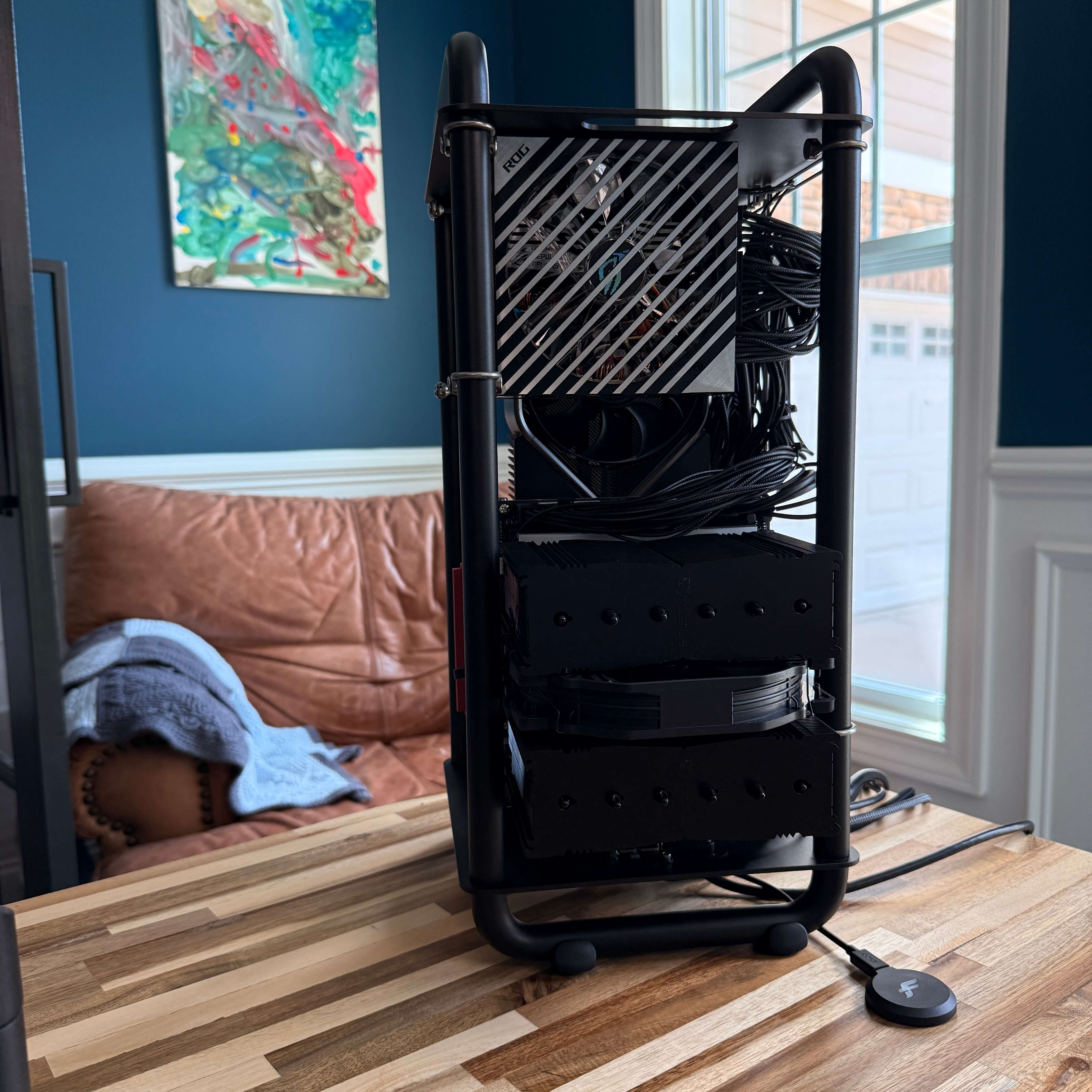
Components:
- CPU: AMD Ryzen 7 9800x3D
- CPU Cooler: Noctua NH-D15
- GPU: Nvidia 3090 Founders Edition
- Memory: Corsair Vengeance 64Gb DDR5-6000
- Motherboard: Asus Rog Strix B850-I
- Storage: 1TB Samsung 990 pro nvme and another 2TB Samsung 990 pro nvme
- Case: Streacom DA6
- Power supply: Asus ROG Loki 1000W
Original components (drama filled explanation below):
- CPU: AMD Ryzen 7 9800x3D
- CPU Cooler: Noctua NH-D15
- GPU: Nvidia 3090 Founders Edition
- Memory: Corsair Vengeance 64Gb DDR5-6400
- Motherboard: Asus Rog Strix B650E-I
- Storage: 1TB Samsung 990 pro nvme and another 2TB Samsung 990 pro nvme
- Case: Streacom DA6
- Power supply: MSI Meg Ai1300P (DO NOT BUY!!!)
Take 1 - a story of tragedy
I have always wanted to build a mini ITX form factor PC. I have followed content creators the likes of Optimum Tech and Devyn Johnston, and it boggles my mind the builds they are able to come up with.
So after watching literal hours of videos, I had determined that my next build would be an mini ITX form factor. And thus the research began.
Now, I am a snob - more courteously referred to as an "enthusiast" - when it comes to the hardware that I put into my builds. I need to have the best, most performant hardware. Which typically makes the small form factor very difficult to work with due to the heat that is produced. So my options boiled down to two paths:
-
I could go full custom and do a build with custom water cooling.
-
I could go open air design.
Option 1 would free up internal casing space and open up the small form factor case options significantly, while also keeping my "enthusiast" hardware in the running for the build. However, the selection of hardware components generally becomes limited because the water cooling options need to design their solutions against that of the GPU manufacturer's silicon designs. In the end, all these customs solutions result in the cost of a used car - and very often make it costly to upgrade any single component.
Option two is far more limited in offerings. Most of these options end up being test benches that by their nature simply don't look nice; and cable management tends to be a nightmare.
When all felt lost, a beacon of light appeared! An open frame case. The Streacom DA6. As soon as I came across this case, I knew I had found my match. A solution that allows me to build using "enthusiast" hardware, while also maintaining a small form factor and a quite unique appearance.
So, the case was found. And as any enthusiast would do, I purchased without any further thought the remainder of the components.
The components
For the CPU, I went with the AMD Ryzen 7 9800x3D. While it isn't the most performant when it comes to core count, the v-cache is invaluable when it comes to gaming.
The GPU, I had planned on upgrading from my Nvidia 3090 to the Nvidia 5090, but alas, those have been virtually impossible to get a hold of since they "launched". And at this point, I don't think I plan to upgrade to the 50xx series with all of the issues that they have had. My 3090 to this point has virtually never been the bottleneck for gaming - though that may change with how well the 9800x3D performs.
For memory, I went with the Corsair Vengeance 64Gb DDR5-6400. As a power user, I am frequently running programs that result in an excess of 40 odd Gigs of memory being used. And I am upgrading DDR4-3000, so this is significant!
Motherboard, really the only option is Asus when you're running an ITX build. So I purchased the Asus Rog Strix B650E-I.
Power supply, I went with the MSI Meg Ai1300P (DO NOT BUY!!!). I went with this PSU for a couple of reasons, the primary reason being that it was 1300w and I know that I'll be upgrading to a more power hungry GPU in the future. DO NOT BUY THIS!!!!!
The build
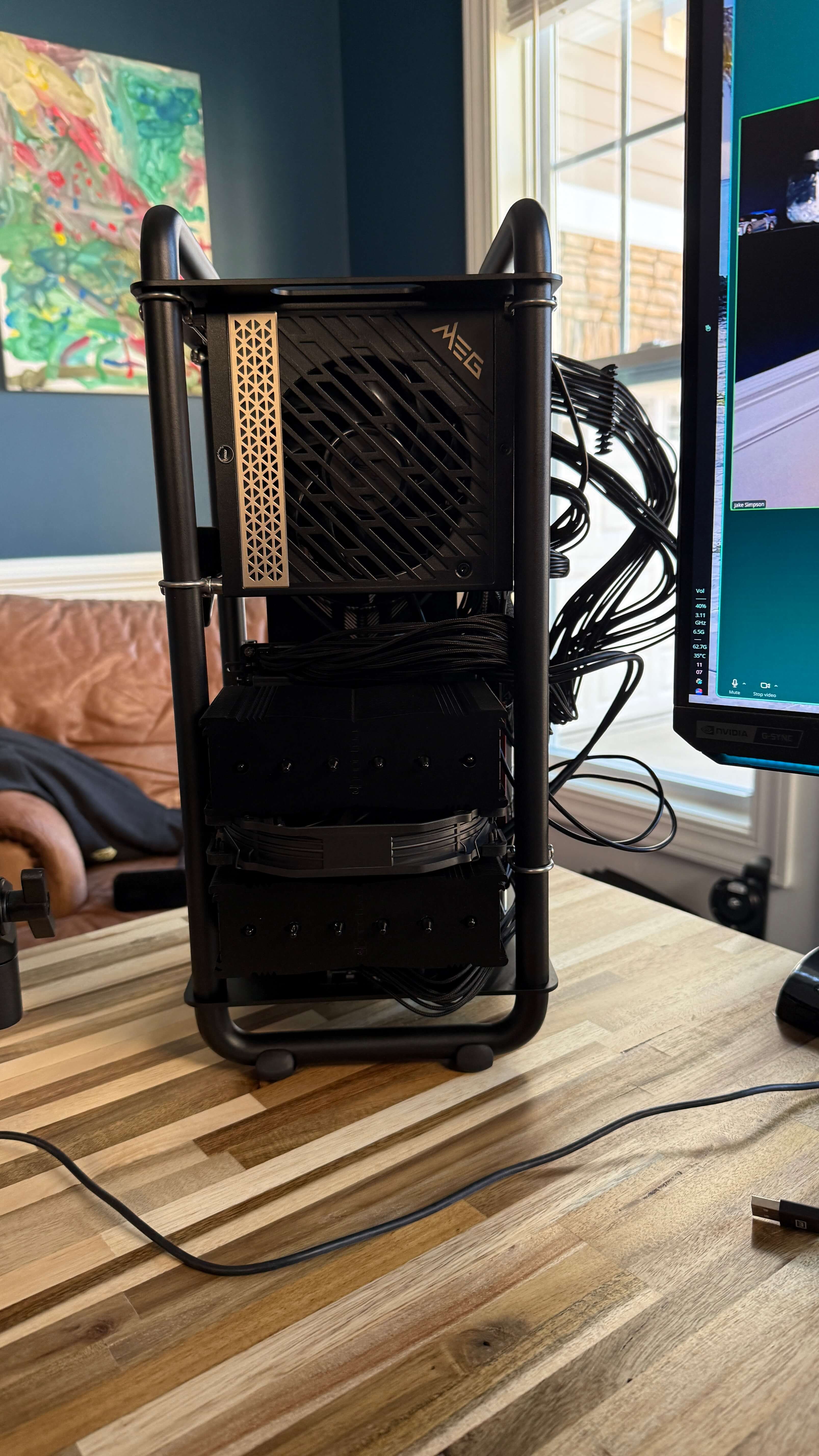
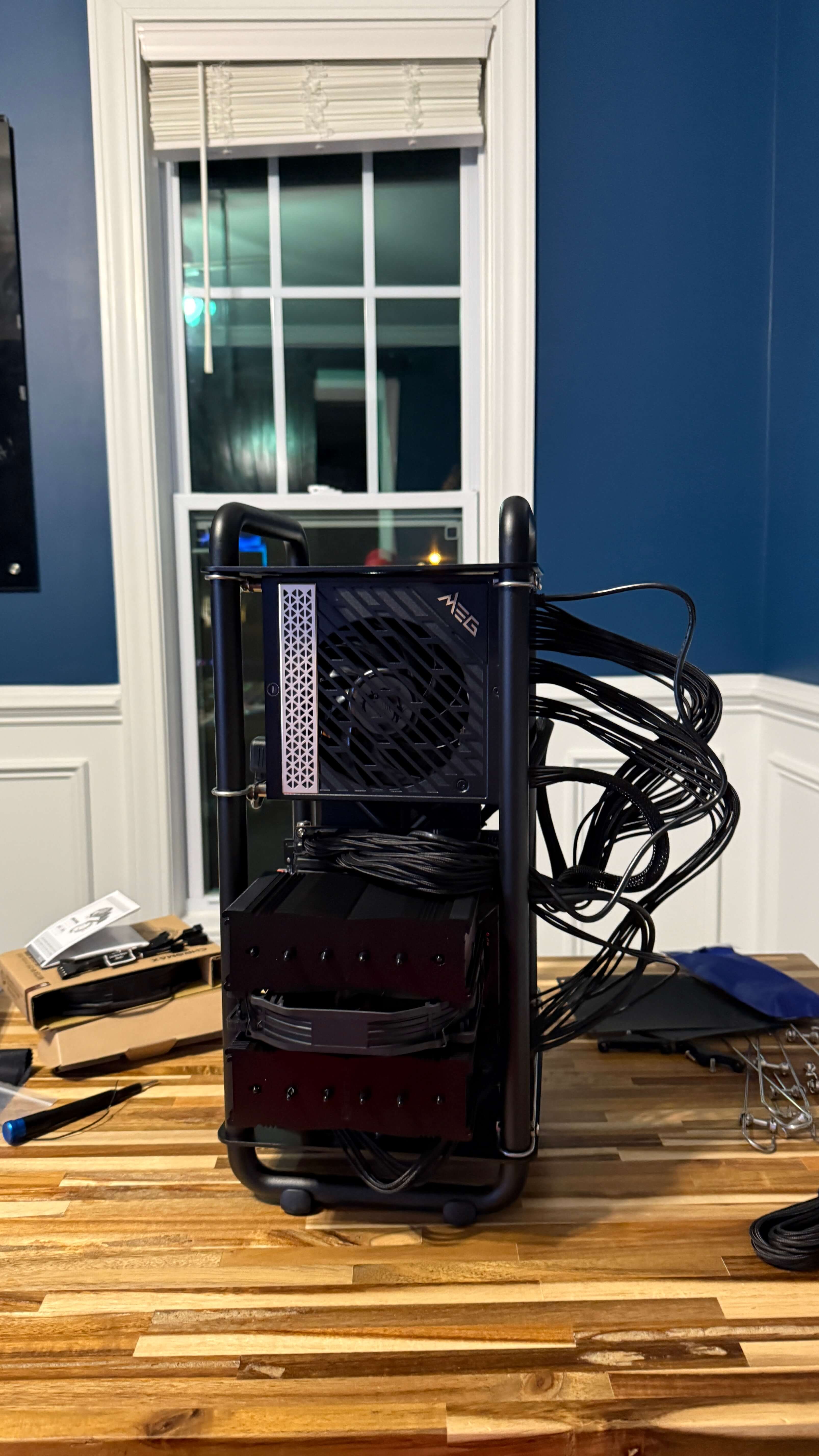
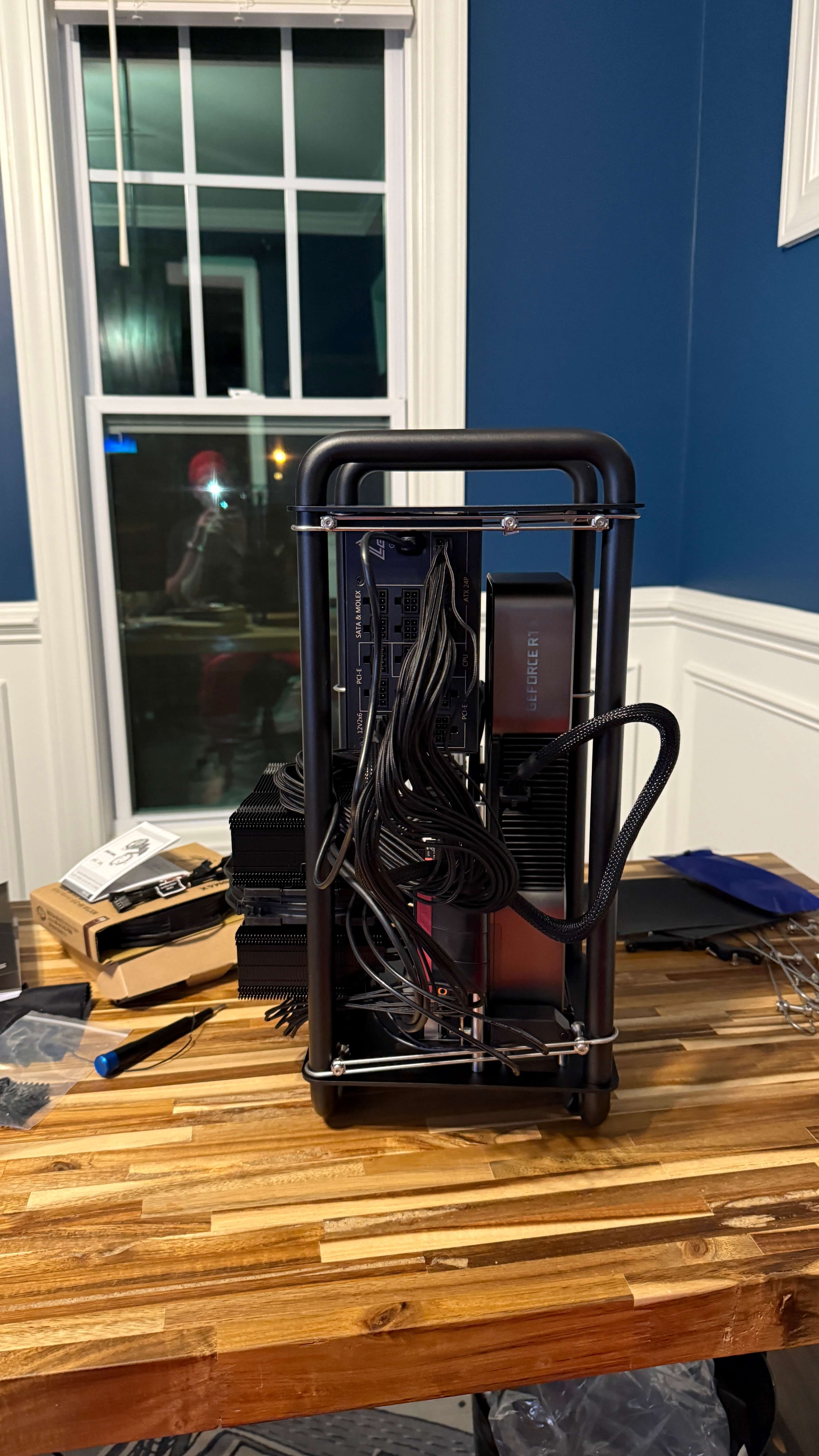
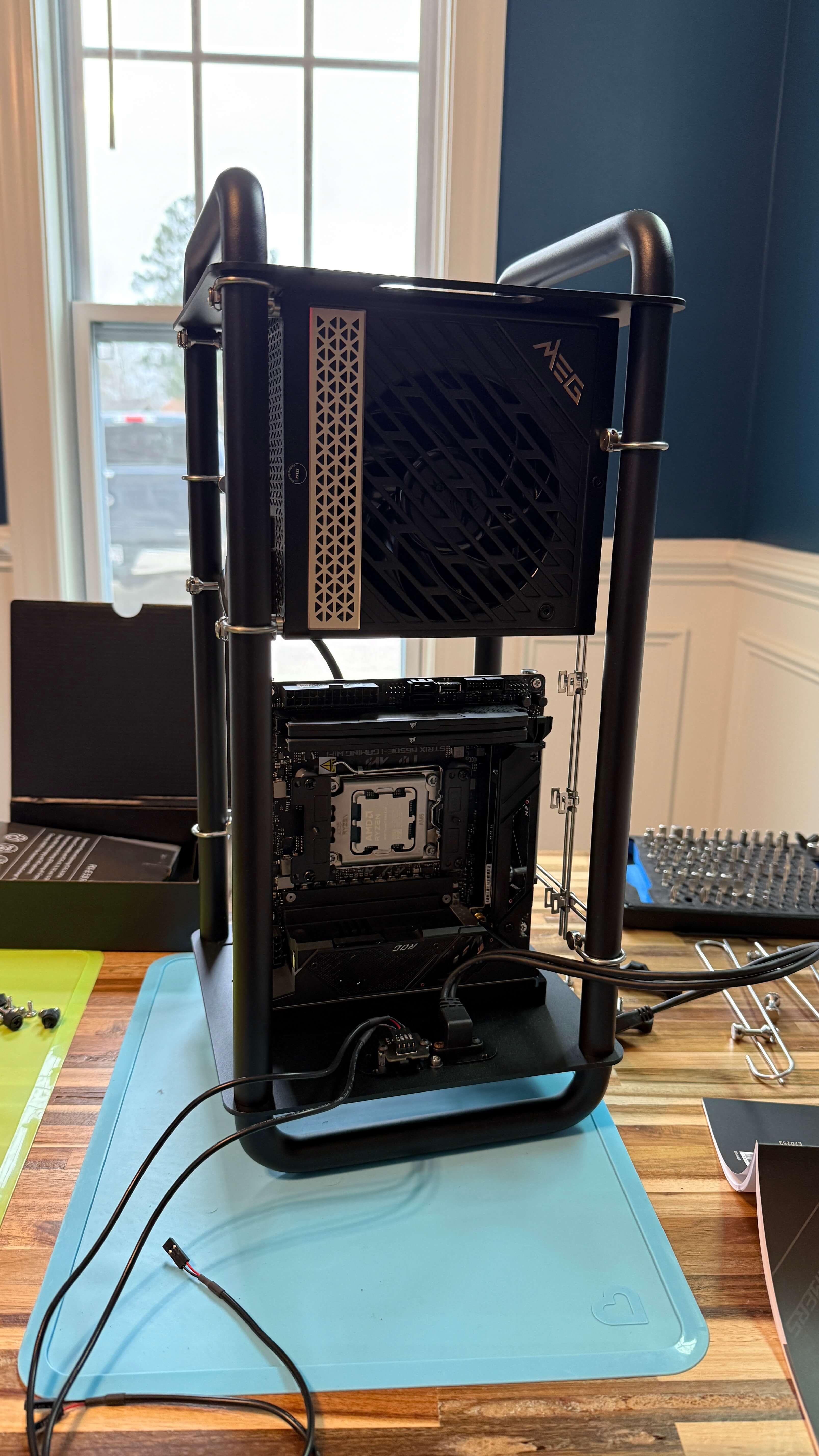
This build was magnificent. Every component that was selected fit just right, filling up the allotted space, leaving no negative, void-like space. The color scheme was immaculate; with a textured matte black frame finish, and complimenting blacks and grays throughout, and a singular golden stripe across the power supply unit that prevented the finished product from blending into anonymity.
This build was glorious! ...For less than 10 days.
Heartbreak
The build went super smooth. I got my dual boot up and running - Windows for gaming, Arch Linux for everything else. I ran that system for a good 75 hours at least; between work and gaming, the system had gone through plenty of pressure testing. But one night, as I was getting ready stomp some enemy players into the ground on some Escape from Tarkov (that's funny because I'm truly terrible at the game), I saw a bright flash of light. Brighter than the noon day sun! And then darkness...
With the only light coming from my strobing LED light strips - like a Cyberpunk horror scene - I reached my hand over to the computer's power button, and clicked it on. Only nothing happened. With a curse on the tip of my tongue, but never uttered, I began the work of debugging.
I tore that newly built system apart trying to figure out the source of the issue. And to this day, I can only assume that the Power Supply Unit (DO NOT BUY!!!!!) literally exploded on me.
This was mostly confirmed when I took the power supply unit out of my previous build and tried to boot up my new computer. The motherboard would take power from the old power supply, but not from the new MSI one; but in both cases, the system would not boot.
With that curse still on the tip of my tongue, and a singular tear in my eye, I bid that night farewell.
Take 2 - the not so magnanimous return
The next morning, I determined I would throw that still steaming hunk of junk that was the new computer into my car and I would make the trek to one of the 7 Wonders. Micro Center. And then I went again. And again.
My first trip, I decided I was going to only purchase the components that I knew for certain were cooked - the power supply unit and the motherboard.
If you haven't been to Micro Center, lemme go on a quick rant. It is quite literally the fantasy dream for any tech enthusiast. You want a pre-built computer, they got it. You want a driving simulator, literally pick any or all from a dozen options. You want a 3D printer that goes squirt, take your pick. You want an air duster, well, you'll need to present your ID and pledge you won't huff that crap - but they still got it!
Rant over, Micro Center was a godsend. They had a newer model of the Asus motherboard that I had purchased for $20 cheaper. And they had a 1000w small form factor (SFF) power supply unit that was $60 cheaper (though 300w less powerful).
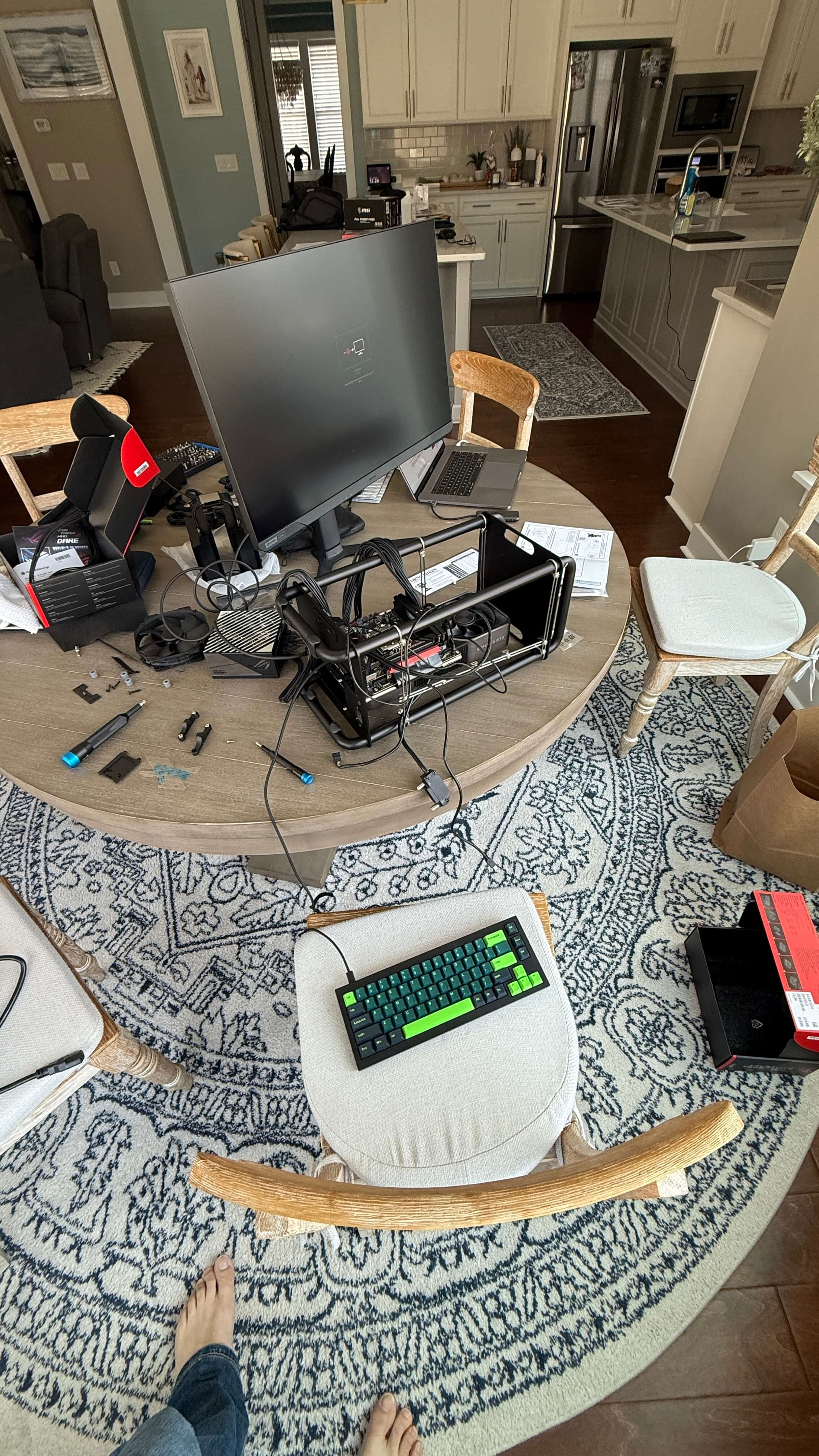
With those two components in hand, and with a prayer in my heart, I drove to my Dad's house (hi dad), where I promptly laid waste to his kitchen with hardware components being ripped out of the corpse that was the "Take 1" build, a computer monitor, a keyboard, multiple extension cords and an iFixit kit.
Then the operation began. Without a care in the world, I ripped that piece of trash MSI power supply unit out and, like the Lonely Island, I threw it on the ground! I then proceeded to gut the motherboard of all the hardware connected to it and - with much effort - gingerly placed them out of the way; hoping they were still salvageable.
With a practically empty case, I started from scratch and built the computer once more with the new components. Unfortunately for me, it turns out that the power supply unit and the motherboard weren't the only victims to the MSI PSU explosion. With everything in place, I still couldn't get the BIOS to post. I tried re-installing a fresh BIOS, but nothing seemed to work. And so, I sent myself back to heaven.
Having already been to Micro Center once that day, I received some knowing smiles from several of the angels that are employed there. On the list for this trip:
- A brand spankin' new AMD Ryzen 7 9800x3D
- A fresh set of 64GB memory sticks
- A prayer that my storage was still intact
With those items purchased and a smirk given by the cashier hinting that this wasn't over, I made my way back to the my Dad's (hi dad).
With those new components placed, now was the moment of truth. And just like that everything booted up and we were back in business. Woohoo!
The return
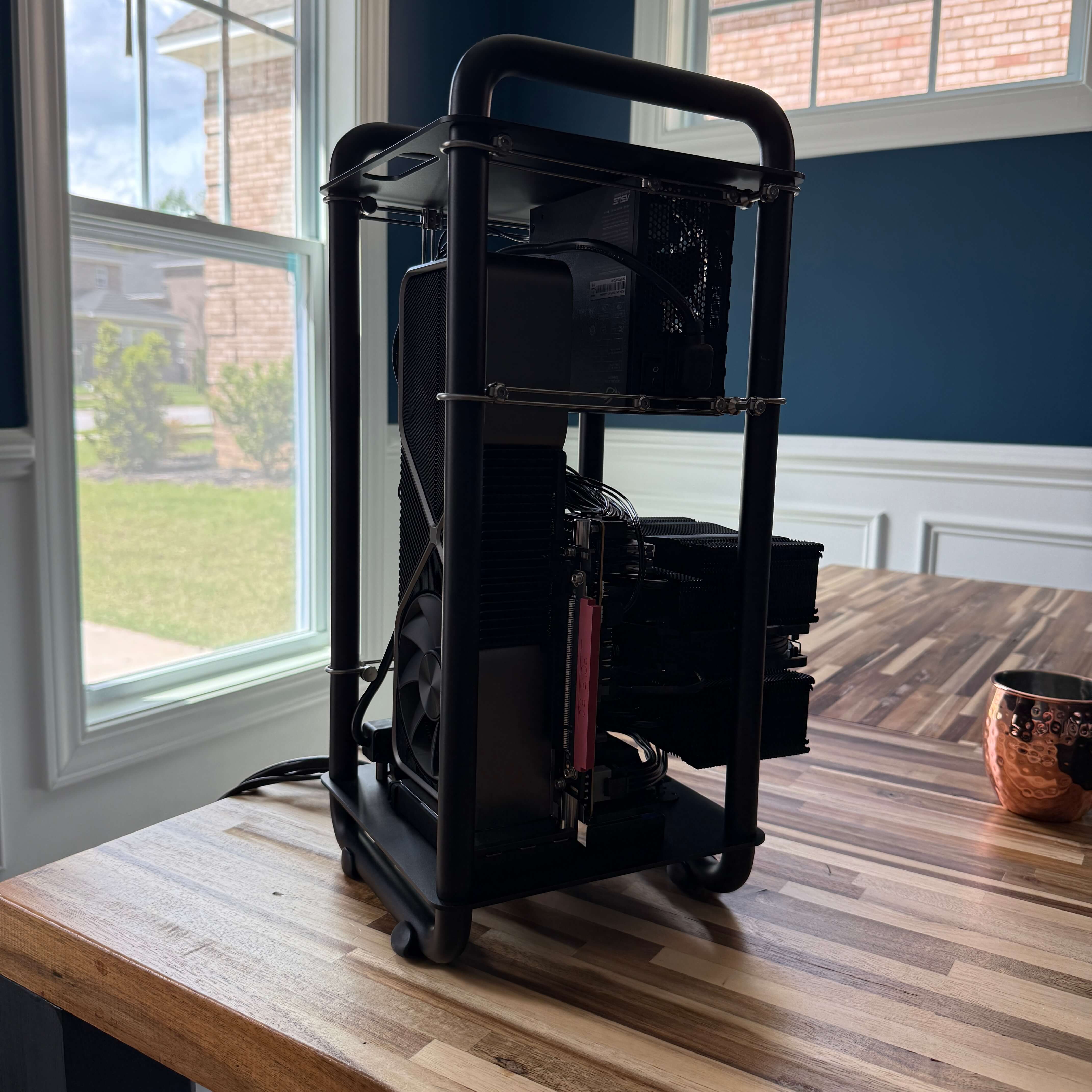
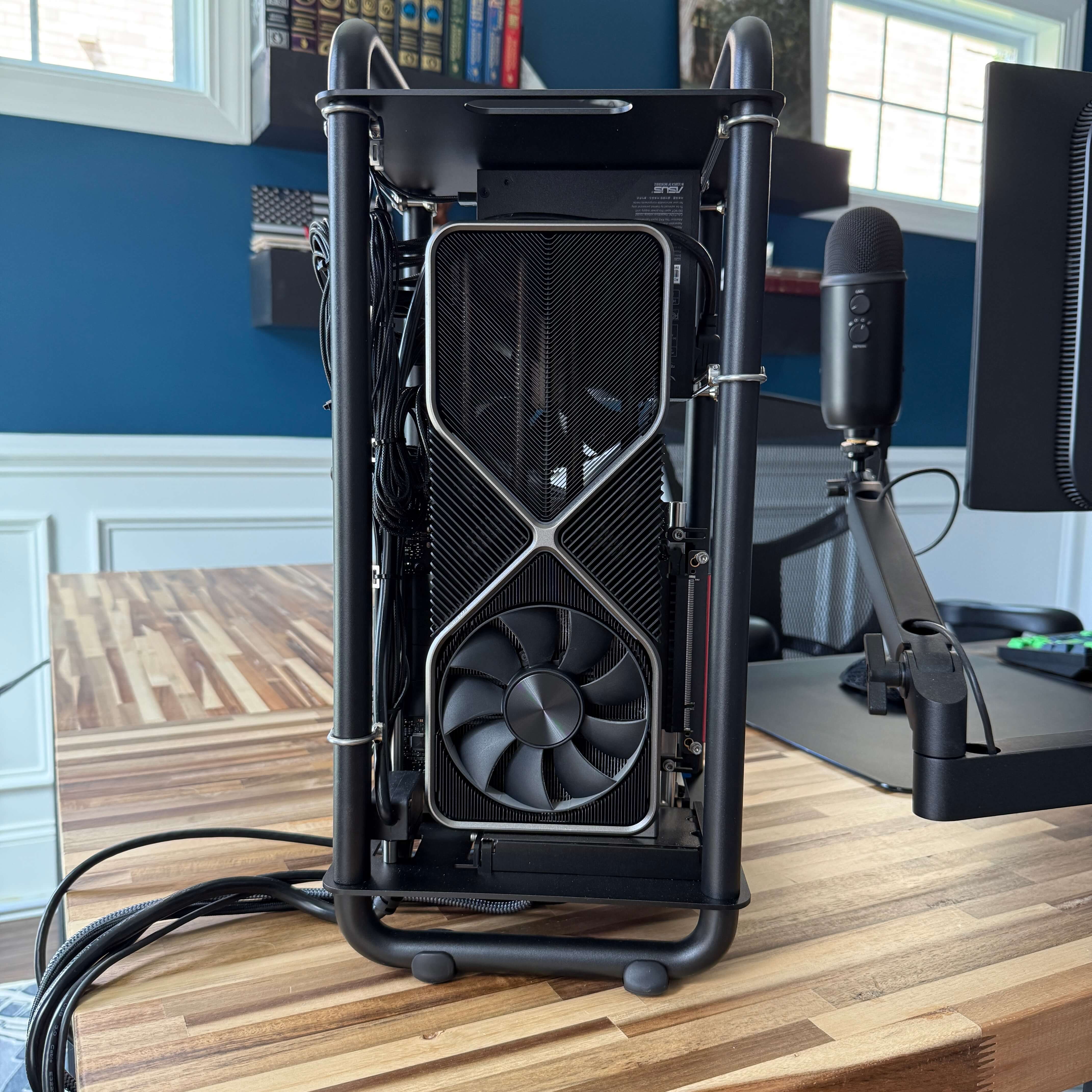
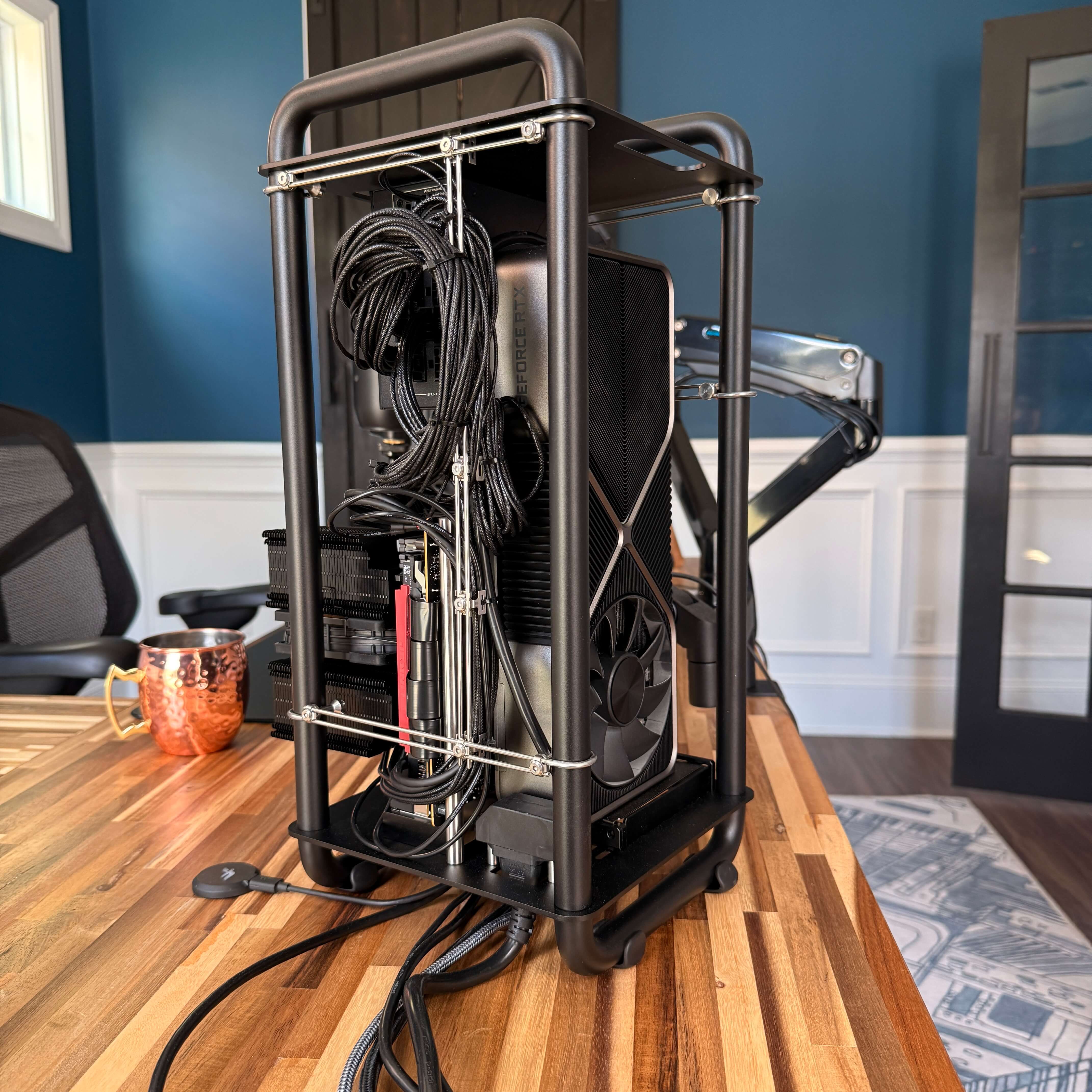
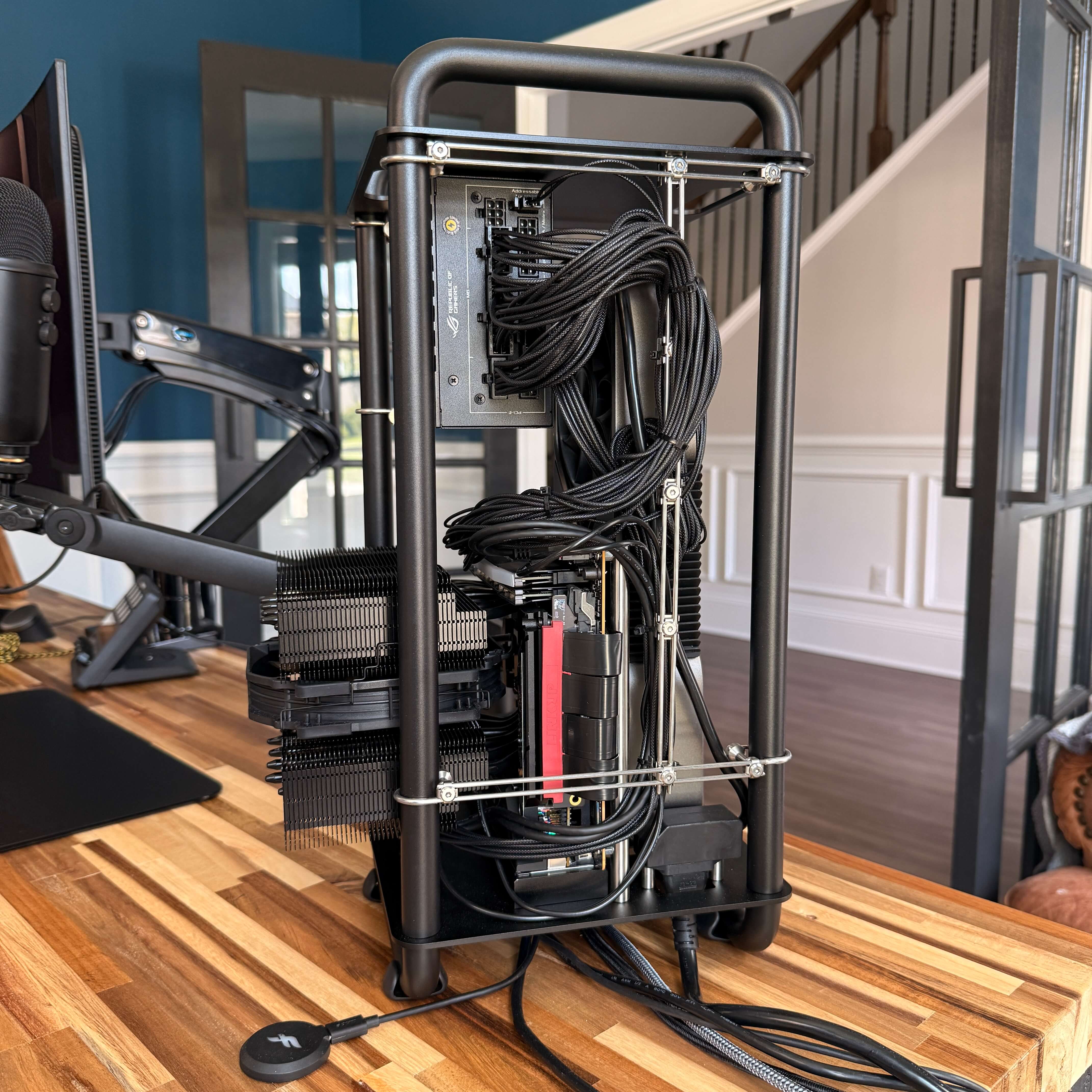
With the system posting to BIOS, I checked that the storage was not corrupted and that the Windows and Arch Linux installs were working properly, it was time to make one final journey to Micro Center. I had purchased the destroyed CPU and RAM from Micro Center, and they were so kind as to accept the return of those burnt components even though they were outside the 14 day window (by 5 days), and even though the power supply unit was the cause of the failure.
Unfortunately, the only component I was not able to return was the culprit. Best Buy refused to accept the return because it was outside their return policy window (even though I wasn't able to build the PC until I received all the components). They went so far as to literally print a receipt out that said "Return Policy" and then 5 paragraphs detailing thw return policy and that I should contact the manufacturer for a warranty claim.
The final product
With the build complete (again), I haven't had any issues with any of the new components that were chosen. The build still looks quite unique, but the aesthetic is no longer cohesive. Everything now has RGB - the only flaw of Micro Center is their lack of non-RGB inventory items. All the RGB has been disabled, but it's still not quite the same as that sleek black and gold that the first build had - that thing had swagger.